
I took over this file at the request of my brother, Roger, who died eleven months ago of pancreatic cancer.
Roger was in his sixty-ninth year when he learned for the first time of the circumstances of his father’s death. In October of last year (2025), three members of the ICRIR, who had come over from Belfast and up from London, sat at Roger’s bedside in a Birmingham hospice and related the details of the shooting of Rory O’Kelly, our father, on 4 March 1977. I was at the meeting along with Geri, Roger’s wife. Roger was alert and able to take it all in.
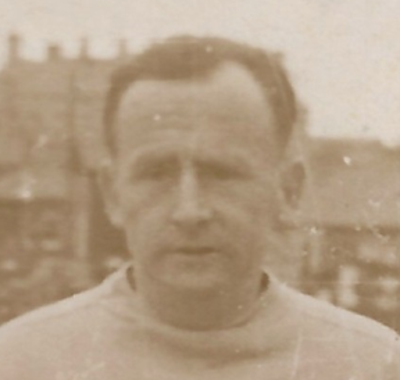
I had no idea of what was in store for us when the two-hour meeting started. I soon became aware that something sacred and transformative was happening. Everyone present was transported fifty years back to the hour and place of our father’s death, had become a spectator of that momentous event. By the end, Roger and I had moved into a space of serenity and light, all anger taken away.
I would never have expected to know this sort of release. Down the years I would have tended to think things like: our father had been killed as a “legitimate target”; these things happen in a “War”; at his already advanced age (59), might he not have died from some painful illness?; or, haven’t other people suffered “a whole lot worse”?…
It is only now I realise that no matter how far away I got from Northern Ireland, how happy and interesting my own life turned out, there continued deep inside a feeling of irrecoverable loss and distress. I could never talk about my father’s killing to anyone, certainly not to anyone in the family. Kindly relatives might occasionally mention in the early years that “his time had come”, or “weren’t you marvellous the way you all coped…”. We didn’t “cope”. We just ignored it.
It was bad form to mention the subject. I would be more concerned for the listener, wanting to spare them embarrassment. What could they say in response to such a strange revelation? And then, I didn’t want people to associate me with a tragedy, a killing. I well understood how victims often feel a sort of shame, wanting to cover up. Healthy successful people didn’t seem to be linked with violent death…
Roger must have felt the same. We were close in age and had talked about everything under the sun, everything except our father. I must have thought he had come to terms with his father’s violent death and got on with things. He certainly seemed to enjoy life.
But no. My little brother, I discovered, had always wanted to know what had happened to his beloved father. And he found out. I can never thank the members of the ICRIR enough for working so hard to piece together the facts of the death of our father, and the three lovely persons who came over to England to tell us what they had found; all done just in time. Roger, died barely a week later. It was clear to Geri and myself that he had now found a great peace.
We will probably never know who the operative was. He was so young, not more than twenty. My age. He must have been nervous as he pushed open the back door into the pub. Was he told afterwards: “You did well, son….”?
It is hard to evaluate the effect a sudden violent death of a loving father will have on his children. What I can say with regard to certain members of my family (other than Roger and myself), and say it with conviction: our father’s violent death contributed, not uniquely, but greatly, to the blighting of their happiness. They were too young to cope and had no access to psychological support of any sort. Each little person got locked into his suffering. Each carried into adulthood a sad unspoken burden.
There is one hero in this story, or heroine I should say. Our mother. Silently and bravely, she accepted her place in the ranks of the lonely widows, still young herself, mother of five, with two little ones still to rear. She kept the home warm and cheerful, and encouraged us to get qualified and be independent. She never got over the loss of her husband. She missed his kindliness, his humour, and his story-telling. She thought of him every day of her life.
To conclude: I hope for a just and satisfactory outcome for everyone who has come to the ICRIR for answers.
Ours was a straightforward case. Yet digging up the simple facts of that simple case fifty years down the line was a difficult task. It took quite some effort to recover the pertinent documents, that is, the odds and ends that had not been destroyed or “disappeared”, and to retrace, literally, the final steps taken by our father in the last three days of his life.
Many of the other cases now in the hands of the ICRIR are complex and fraught with horrendous possibilities. The Commission and its investigators can only advance if they have wide and unfettered powers to get at the Truth, and know they have the full backing of the Law. I am sure the three members of the ICRIR we met on our case possess the will, the courage and tenacity needed to face down any political obstacles and excuses impeding their progress.
Truth takes precedence and nothing short of the Truth in full will work. Truth is the foundation for real forgiveness and a lasting reconciliation.
Anne Frances O’Kelly
Paris, 3 September, 2026